Art has the power to ask questions that stay with us for a long time - especially when it touches on themes as universal as fear, transformation, agency, and confronting oneself.
Miłosz Tomkowicz, a laureate of the 1st Rafał Brzoska Foundation Scholarship Competition, is a young artist whose practice focuses primarily on sculpture and painting. In 2025, he graduated from the Faculty of Sculpture at the Jan Matejko Academy of Fine Arts in Kraków, receiving distinction for his diploma work. In his artistic practice, he explores themes of memory, folk narratives, cultural identity, and violence — particularly in its military dimension.
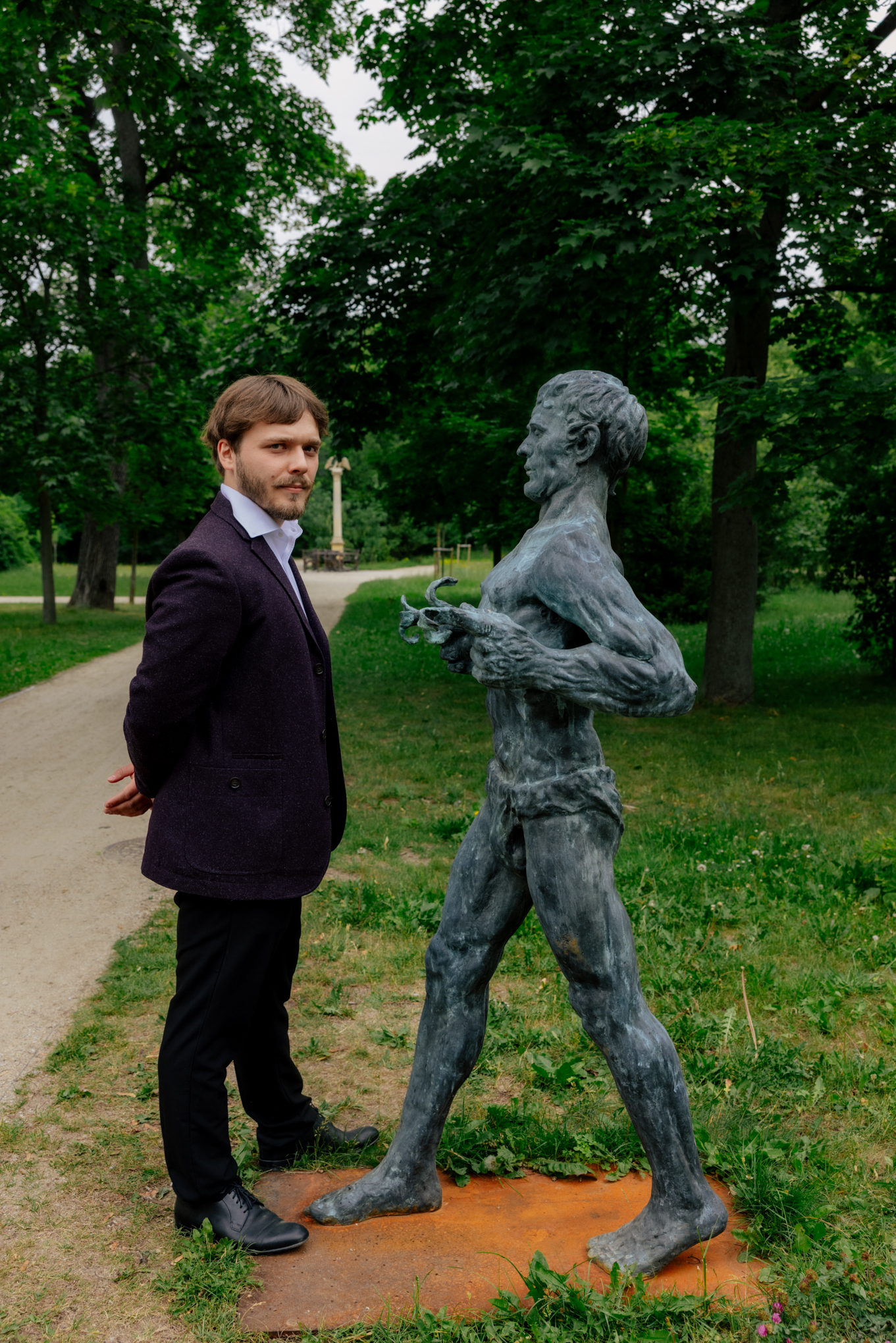
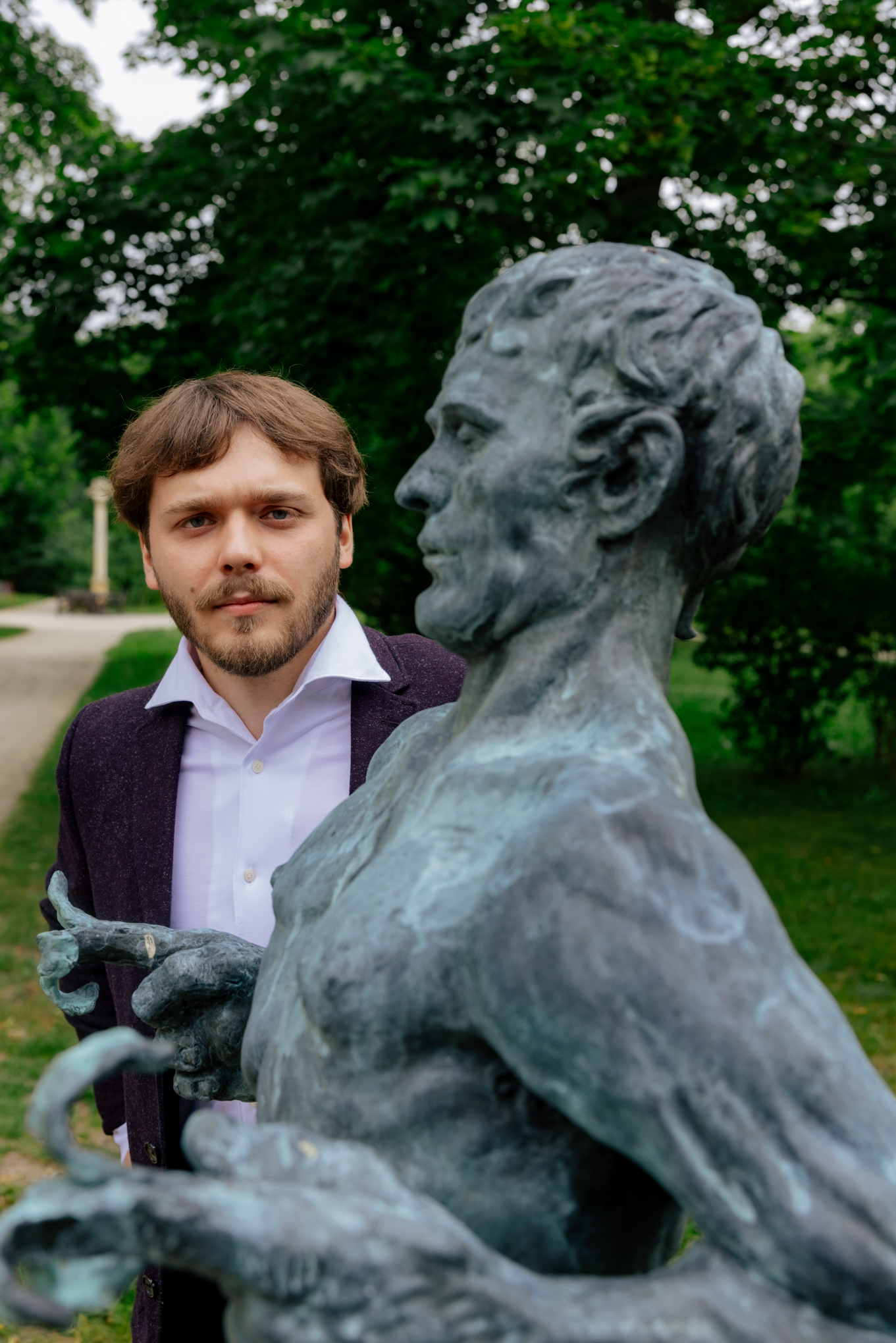
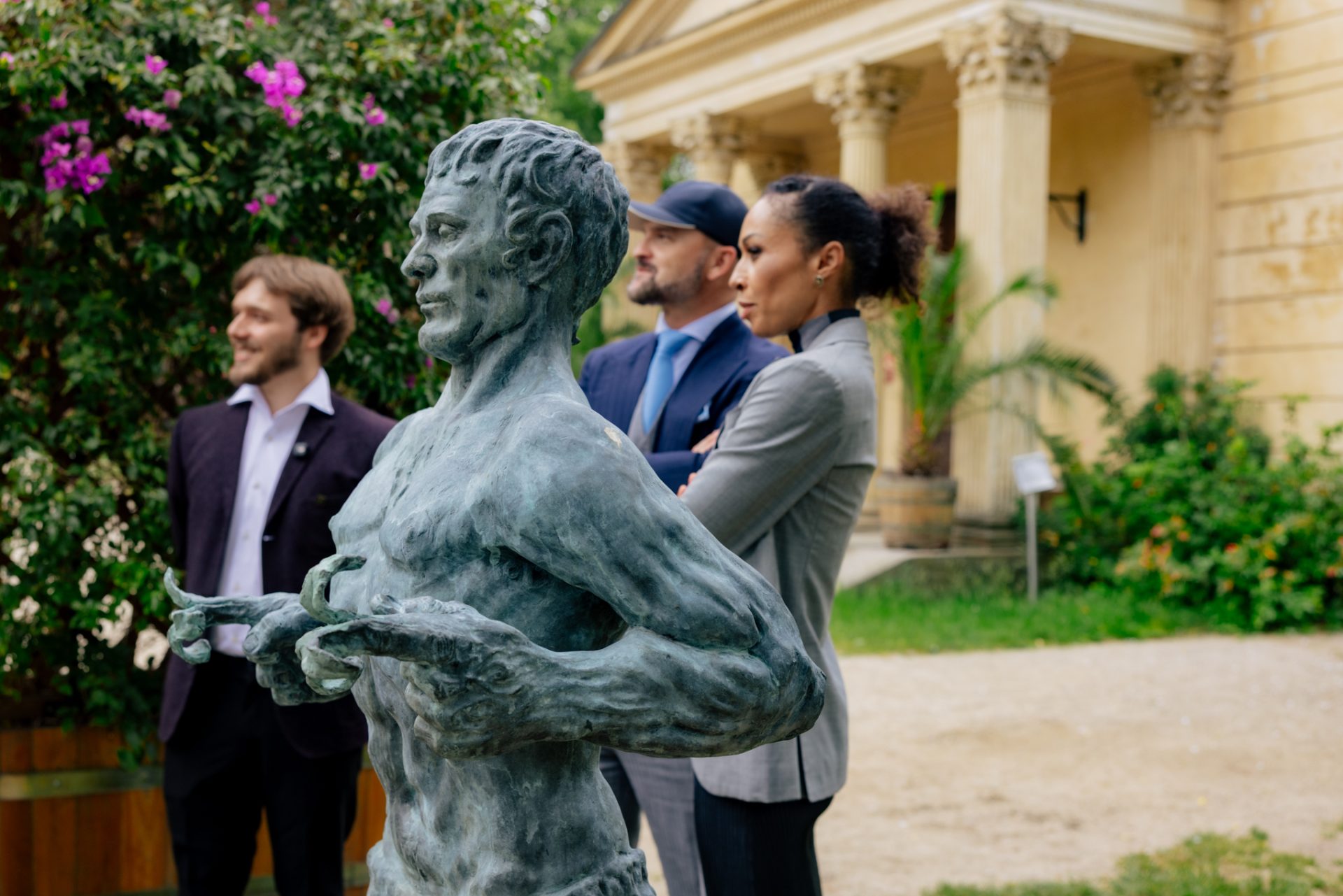
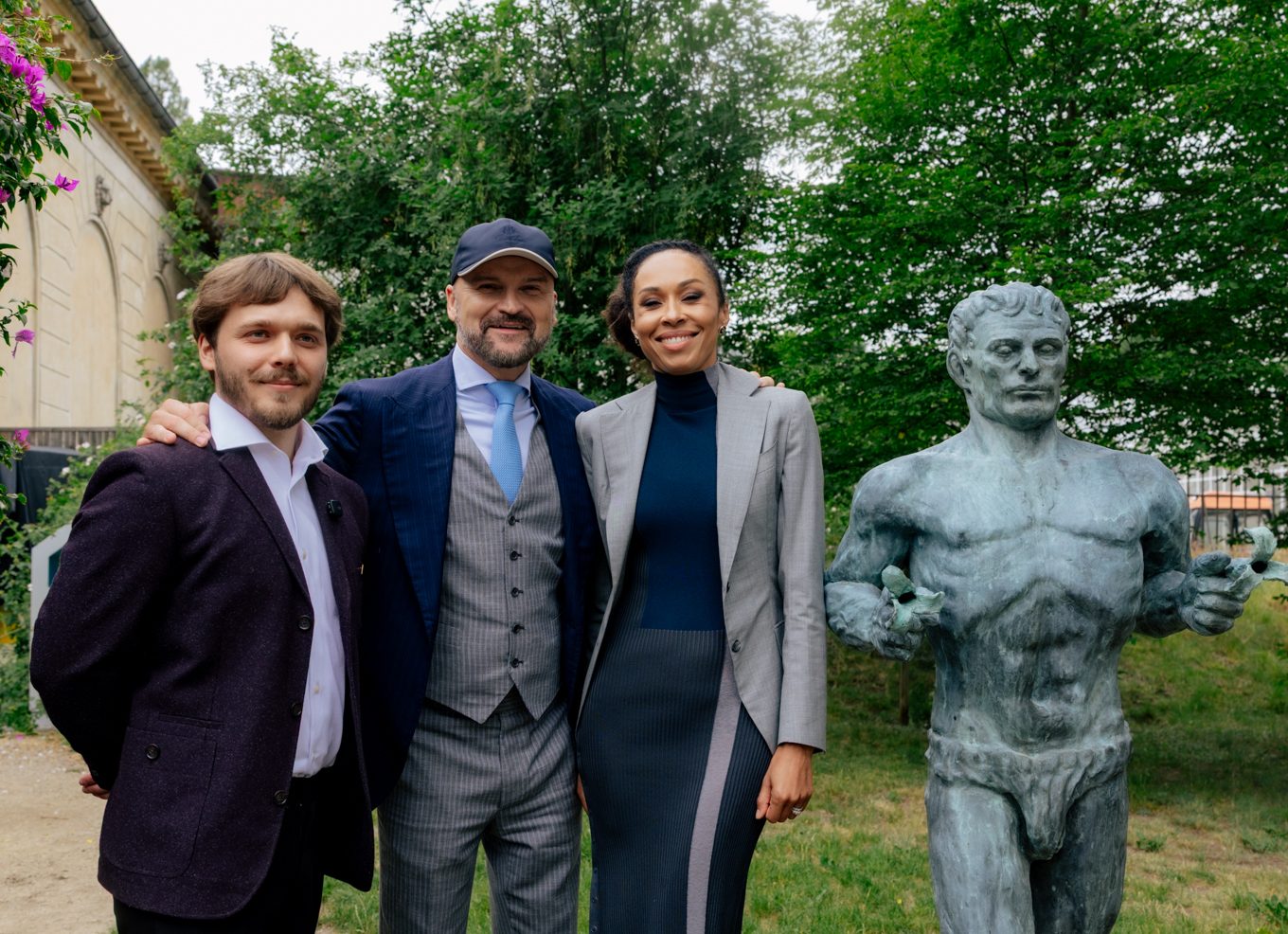
One of his works, the sculpture ‘’The Gunslinger’’, is currently on view in the Orangery of the Museum of King Jan III’s Palace at Wilanów, where it will be presented until August. The exhibition features two identical sculptures, positioned opposite one another, which strengthens the meaning of the work and emphasizes the motif of confrontation with oneself. The piece presents a moving figure of a gunslinger aiming at his mirror image - a powerful representation of facing one’s fears, limitations, and internal barriers.
“The hardest enemy to defeat is ourselves.”
This is how the artist describes his work, pointing to the idea that overcoming oneself is a condition for growth, change, and metamorphosis. In ‘’The Gunslinger’’, however, the titular weapon is not a revolver, but the hands. The pointing fingers take on the role of a barrel, which is torn apart by the shot and unexpectedly transforms into flowers.
This absurd, almost cartoon-like gesture can be read as a ray of hope. Transformation emerges from an act of violence, and the sculpture becomes a story about the tension between will and the automatism of action.
The work was also created in the context of contemporary armed conflicts and questions about the limits of power and its instruments. Placed within the space of Wilanów, it enters into dialogue with history and with the contemporary experience of anxiety.
We are pleased that the work of our Scholar can be presented in such an exceptional setting, encouraging reflection on transformation, responsibility, and hope.